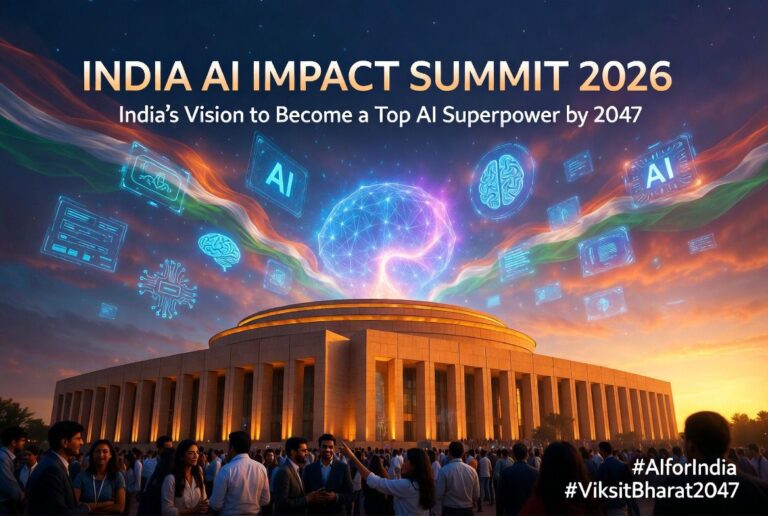
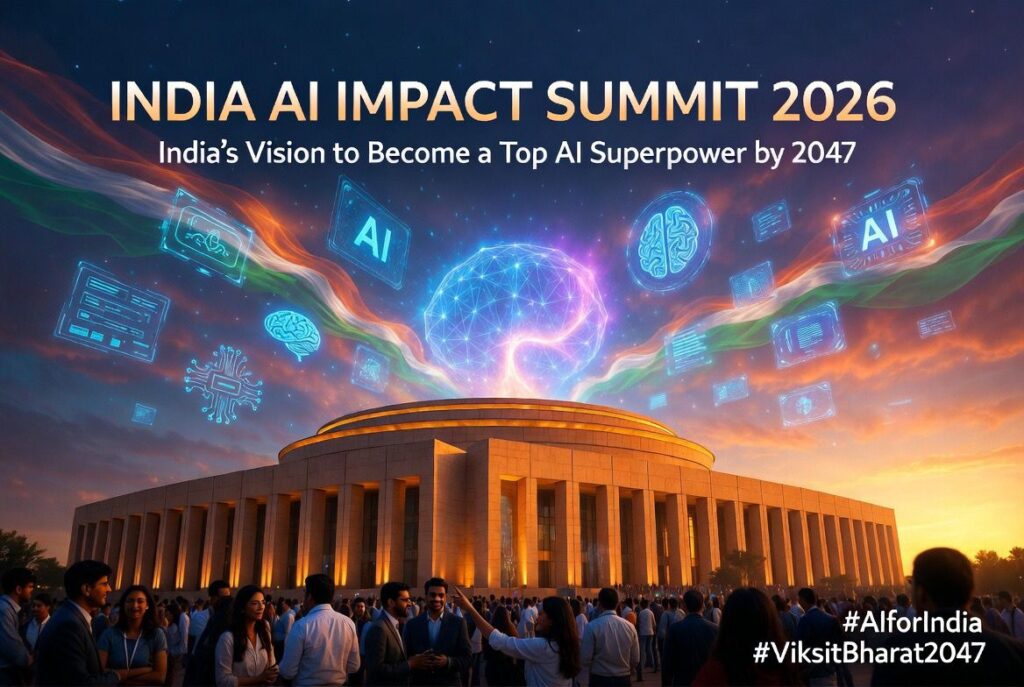
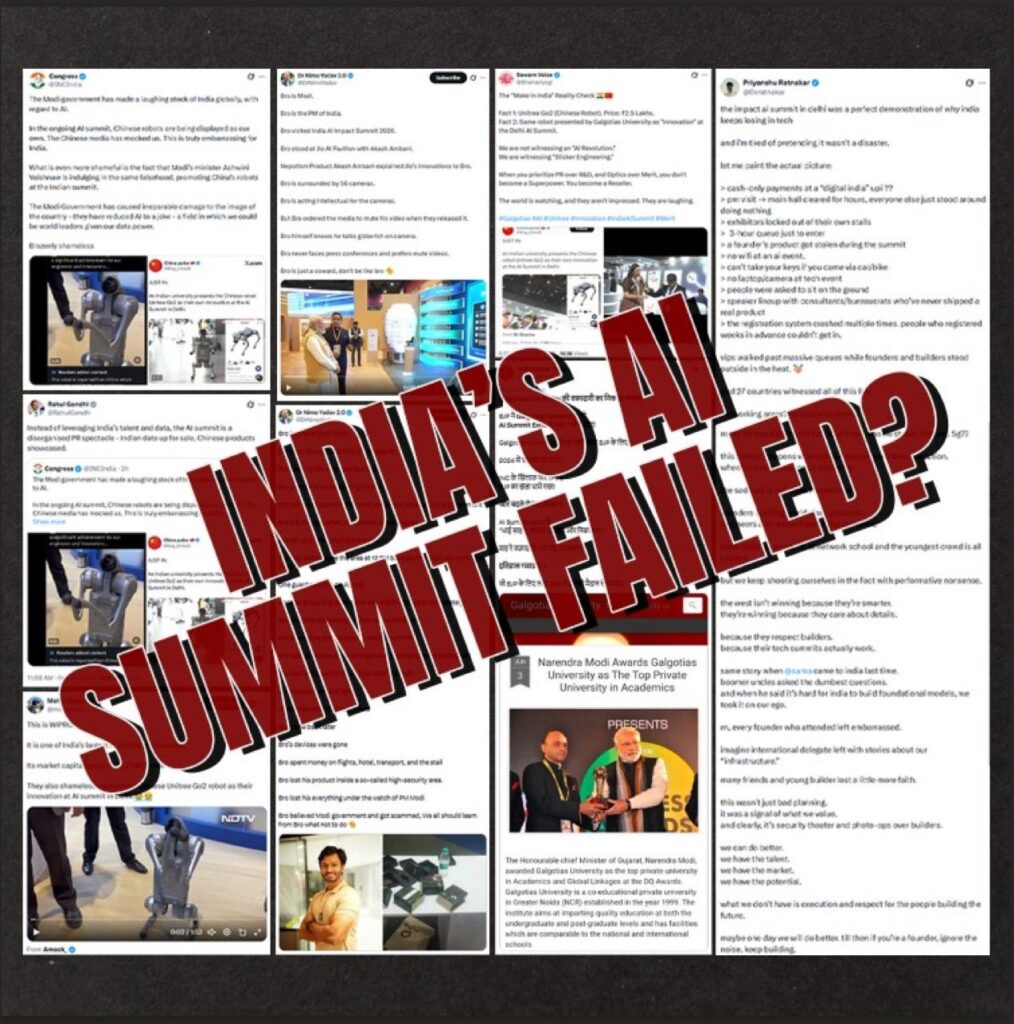
The India AI Impact Summit 2026 in New Delhi has opened its doors to the world, and the excitement is real. This is the first major global AI gathering hosted in the Global South, bringing together leaders from over 100 nations, 20 heads of state, and thousands of innovators. Yet some sections of the media and opposition have chosen to spotlight only the small hurdles of the opening day. A few coordination issues, a resolved security incident, and one stall correction have been blown out of proportion to paint the entire event as chaotic. That narrow lens misses the bigger picture of scale, innovation, and national ambition on full display.
Prime Minister Narendra Modi laid out a clear and inspiring roadmap in his recent interview (read here https://aninews.in/news/national/politics/india-should-be-among-the-top-three-ai-superpowers-globally-pm-modi-sets-2047-vision20260217180336/ ) . He wants India to rank among the top three AI superpowers globally, not merely as a user of the technology but as a creator of it. He described AI as a powerful tool on our journey to a developed India by 2047, one that can dissolve divides rather than deepen them. Whether it is early disease detection in rural clinics, personalised learning in local languages, or smart advice for dairy farmers, the focus remains firmly on people-first progress. The Prime Minister also addressed youth concerns about jobs, reminding everyone that preparation and skilling turn new technology into fresh opportunities.
The numbers speak for themselves. Over 300,000 people registered, with 70,000 showing up on the very first day. The five-day event at Bharat Mandapam featured more than 300 exhibitors from 30 countries and over 500 sessions. Compare that with last year’s Paris AI Summit, which was invitation-only and drew far fewer participants in a tightly controlled setting. Here in Delhi, the doors stayed open to citizens, students, and dreamers. That sheer enthusiasm is something to cheer, not criticise.
What truly stood out were the homegrown breakthroughs unveiled on the expo floor. Tech professional Ujjwal Chadha, an engineering lead with over a decade of experience building scalable software, shared his firsthand impressions after visiting the summit. Five Indian innovations left him impressed: EkaScribe, which lets rural doctors handle patient records hands-free; Ottobots, autonomous delivery robots that navigate hospital corridors without help; Sarvam Kaze, stylish AI spectacles that describe the world in your own language through bone conduction; Sarvam Edge, a fully offline AI platform supporting all 22 scheduled Indian languages; and Mankomb’s Chewie, a kitchen appliance that turns wet waste into nutrient-rich soil using real-time sensors. These are practical solutions designed for Indian realities, from remote villages to busy cities.
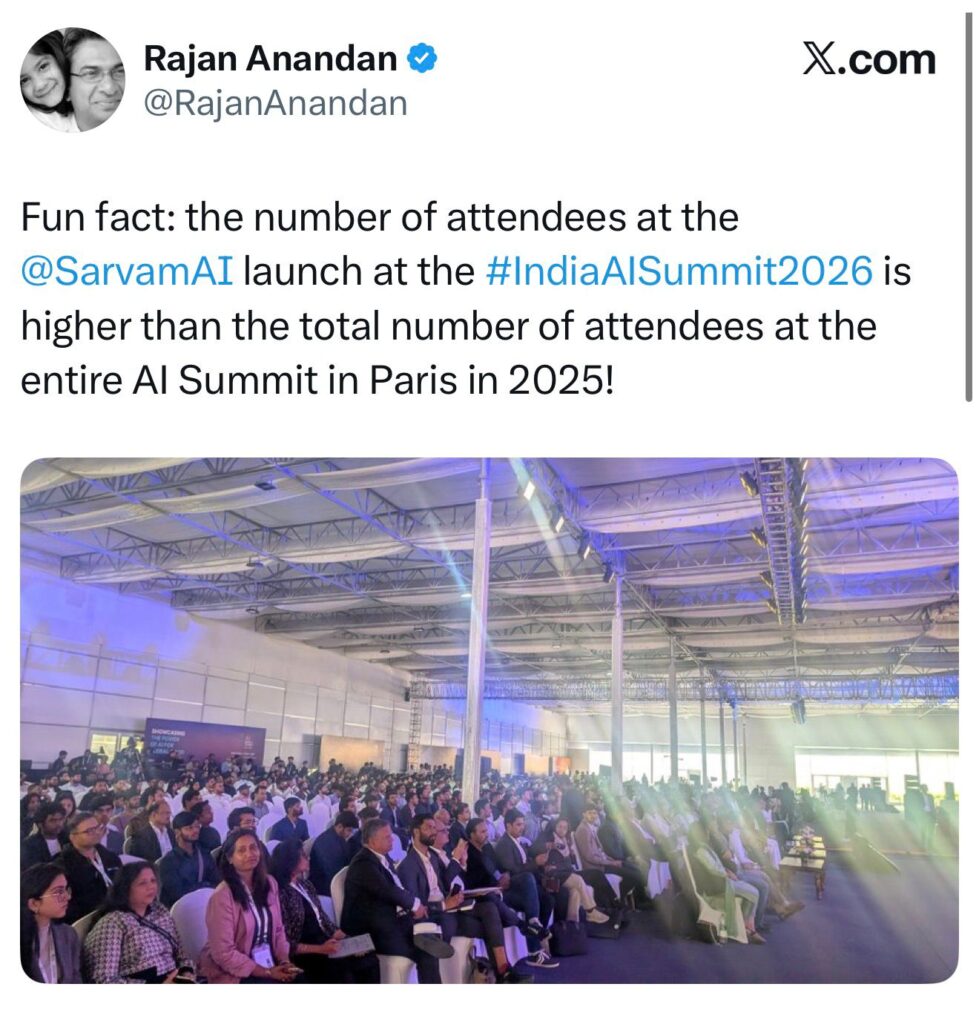
Venture capitalist Rajan Anandan, who leads Surge at Peak XV Partners, pointed out a striking detail. The crowd at the Sarvam AI product launch alone outnumbered the total attendance of the entire Paris summit. That single observation captures the energy and confidence flowing through the venue.
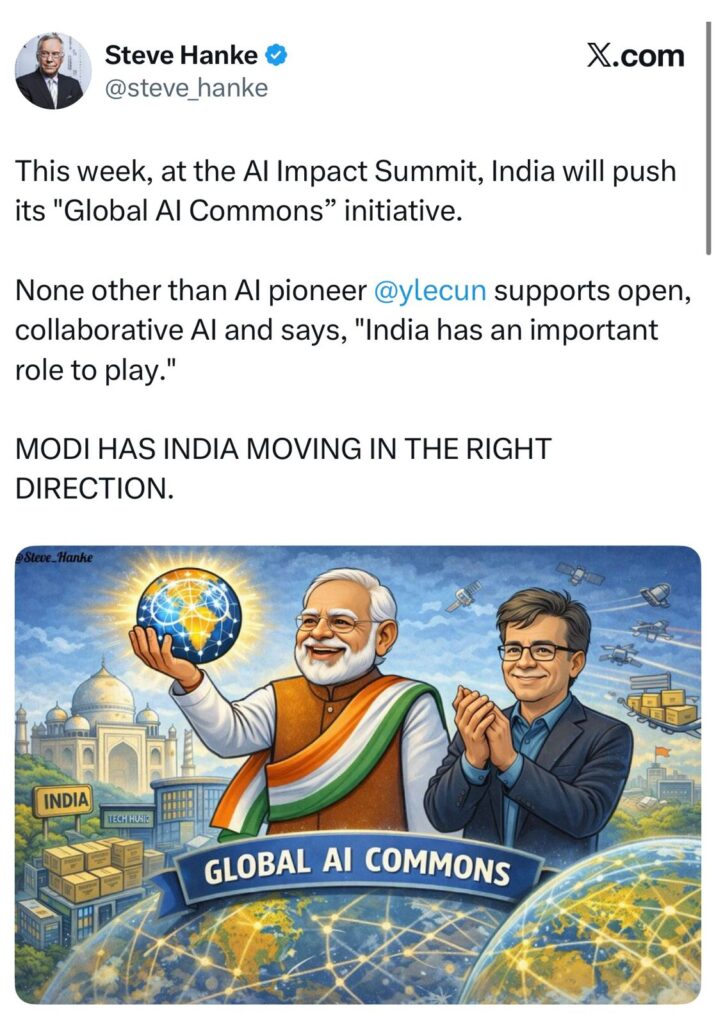
Renowned economist Professor Steve Hanke of Johns Hopkins University highlighted another forward-looking move. India is advancing its “Global AI Commons” idea, an open and collaborative approach to AI that has earned praise even from AI pioneer Yann LeCun. Professor Hanke noted that Prime Minister Modi is steering the country in the right direction.
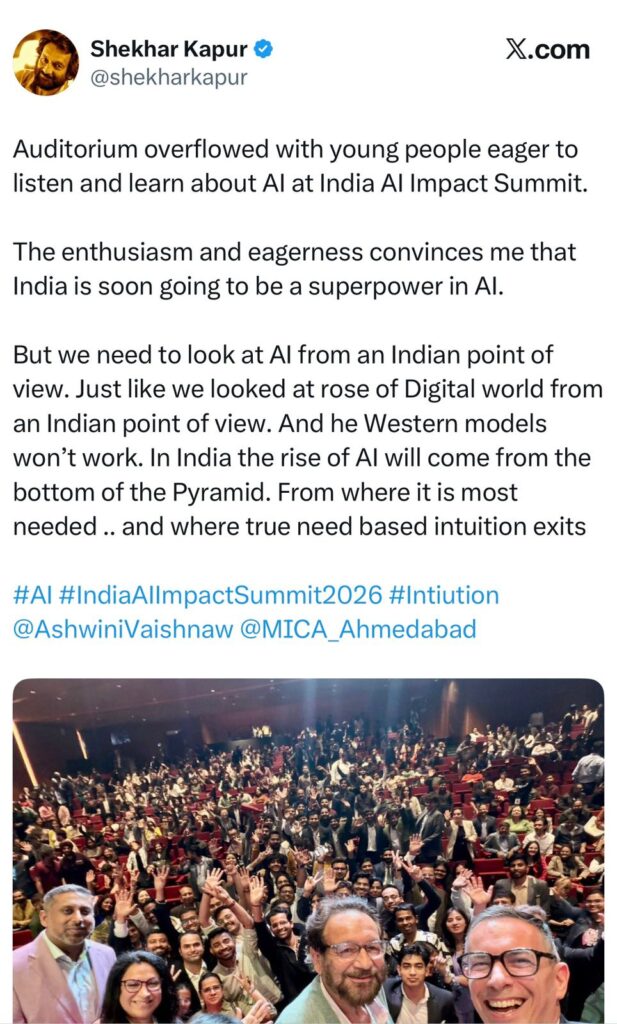
Filmmaker Shekhar Kapur, who has actively used AI in his own creative work, described the overflowing auditoriums packed with eager young people. He believes this grassroots hunger will help India become an AI superpower, but on our own terms, rising from the bottom of the pyramid where real needs spark genuine innovation.
Senior journalist Siddharth Zarabi, Group Editor at Business Today, captured the spirit perfectly. He acknowledged that every large Indian event has its share of glitches and multiple layers of coordination. Yet he urged everyone not to let those minor gaps overshadow the visible hunger for knowledge. Young founders were busy networking, visitors were genuinely reading technical brochures, and the overall atmosphere reflected a nation that is ambitious and on the move.
Even the much-discussed opening-day issues tell a story of quick action. Organisers publicly apologised for the initial coordination hiccups and fixed them by day two. In one case involving missing devices, Delhi Police filed an FIR, reviewed CCTV, identified those responsible, and recovered everything within 24 hours. The founder himself thanked the authorities for their swift support. Another stall that tried to showcase foreign equipment as Indian-made was promptly removed. These responses show accountability, not failure.
Rajeev Chandrasekhar, summed it up well. He noted the unprecedented interest from young Indians who see themselves as stakeholders in the country’s tech future. Yes, there were teething problems on day one, but they stemmed from far higher turnout than expected, a sign of genuine enthusiasm rather than poor planning.
The real narrative here is one of aspiration. India is investing heavily in skilling, building AI centres of excellence, expanding high-performance computing access, and creating sovereign models like BharatGen. The summit has already attracted reported investment commitments worth $200 billion. It is showcasing solutions that directly touch lives, from healthcare and agriculture to education and sustainability.
Critics who focus only on queues or isolated incidents are applying a different standard. Other global summits have faced their own challenges without the same level of scrutiny. What sets this event apart is its inclusive scale and its roots in Indian needs. The youth flooding the halls are not just spectators; they are the next generation of builders who will take these tools forward.
As the summit continues, let us celebrate the energy, the innovations, and the clear vision guiding it all. The India AI Impact Summit 2026 is more than an event. It is proof that India is ready to lead in artificial intelligence with confidence, inclusivity, and a deep sense of purpose. The coming years will show how these seeds planted in Delhi grow into a stronger, smarter, and more equitable nation. This is a moment to back, not belittle.
Author : Sandiip Gandotra, (Editor-In-Chief) is a serial entrepreneur, startup founder, social media influencer and political analyst with 25 years of overall experience. Tweets at Sandeep Gandotra