The Hidden History Congress Never Wanted India to Know
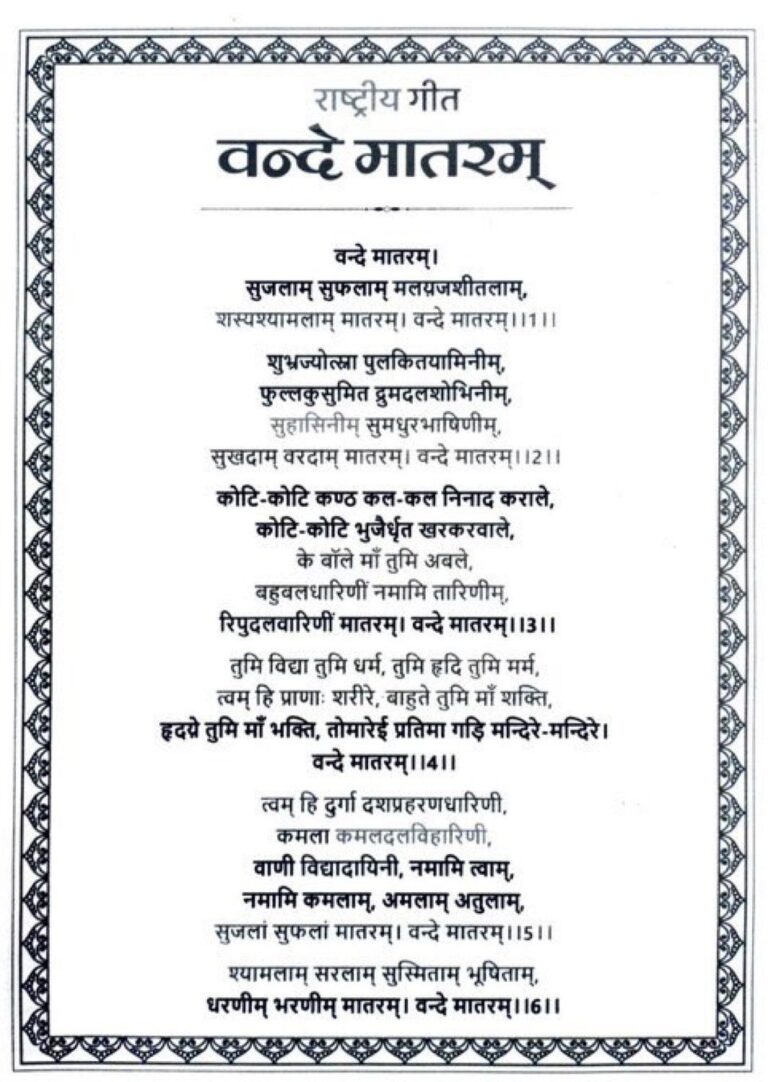
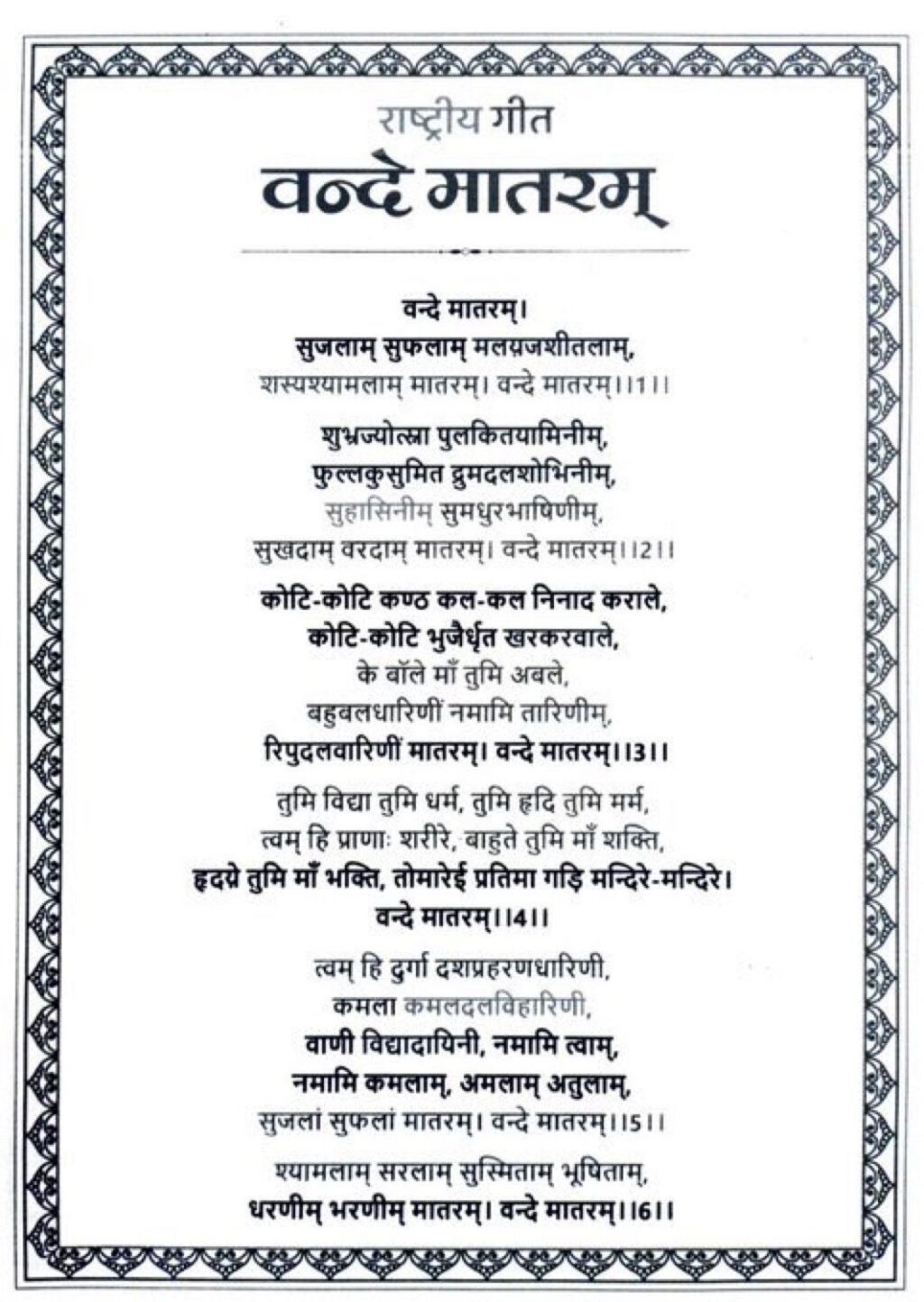
For decades, generations of Indians grew up reciting only the first two stanzas of *Vande Mataram*, the iconic anthem that fueled the freedom struggle. Many believed this truncated version was the complete song. The truth, however, is far more revealing—and damning. Buried in the archives of Congress Working Committee resolutions, Jawaharlal Nehru’s personal letters to Muhammad Ali Jinnah, and his correspondence with poet Ali Sardar Jafri, lies evidence of deliberate censorship. This was not driven by constitutional necessities or administrative convenience, but by a deeper ideological discomfort: the song’s vivid invocation of Maa Durga and the Motherland as a divine embodiment of Hindu civilizational strength. Under Nehru’s leadership, the Congress party chose cultural appeasement over national pride, setting a precedent for diluting India’s identity to placate political lobbies.
The 1937 Congress Working Committee Decision: The First Act of Cultural Appeasement
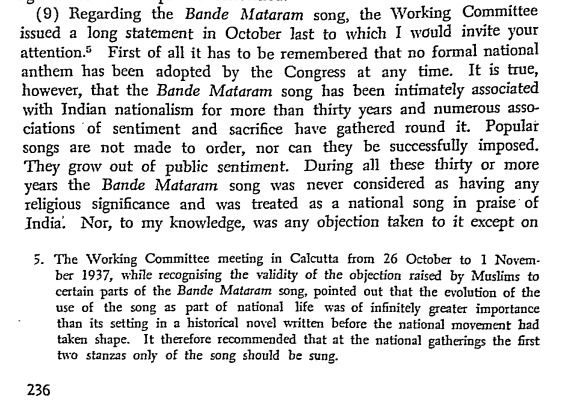
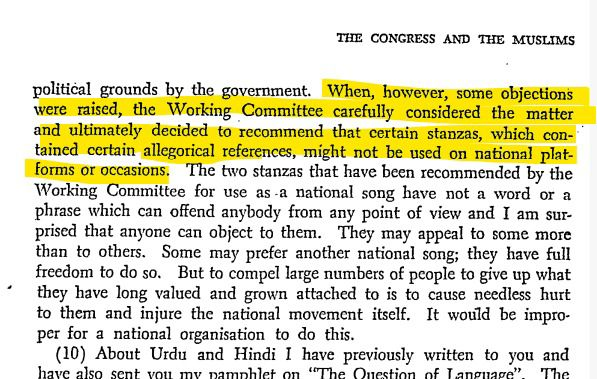
The turning point came in 1937, when the Congress Working Committee formally resolved that “certain stanzas… containing allegorical references… might not be used on national platforms.” These “allegorical references” were unmistakable:
– The imagery of Maa Durga as the protector and source of power.
– The portrayal of the nation as the Mother Goddess.
– Deep roots in India’s civilizational nationalism, drawing from ancient Sanskrit traditions.
For over three decades, *Vande Mataram*—penned by Bankim Chandra Chatterjee in 1875—had united revolutionaries from Bengal to Punjab, inspiring acts of defiance against British rule. Yet, rather than defend this symbol of unity, the Congress leadership opted to trim it. This decision marked the inaugural instance of prioritizing political expediency over cultural integrity, a pattern that would define the party’s approach to identity politics for generations.
Nehru’s Letter to Jinnah: Ideology Over National Unity
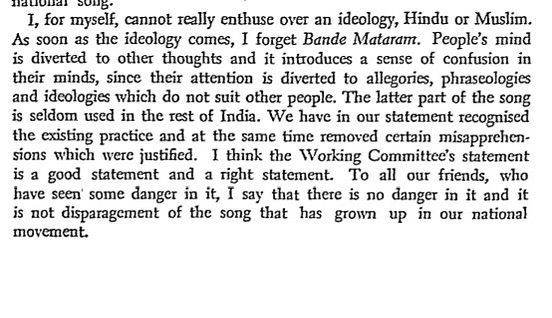
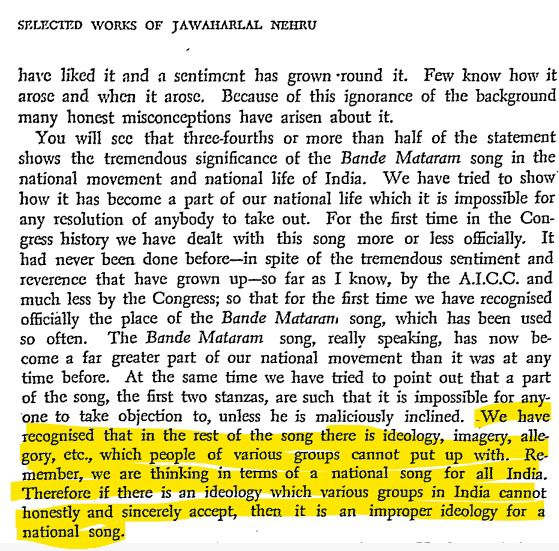
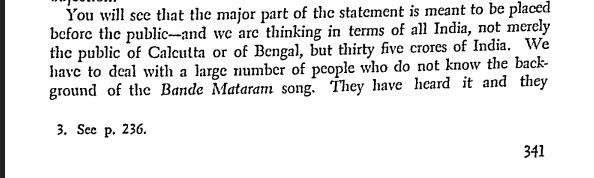
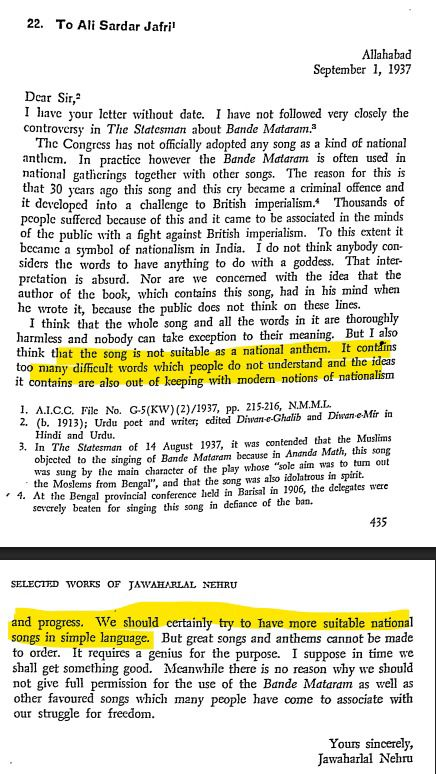
Nehru’s concessions to Jinnah, as documented in his correspondence, expose the core motive. He wrote: “The rest of the song contains ideology, imagery and allegory which various groups cannot put up with.” The offending elements? The song’s celebration of Maa Durga as the embodiment of *Shakti*—strength, resilience, and divine femininity central to Indian ethos.
In Nehru’s view: “If various groups cannot sincerely accept it, then it is an improper ideology for a national song.” This was no neutral constitutional debate; it was a calculated surrender. By framing Hindu symbolic imagery as divisive “ideology,” Nehru established the Congress doctrine: discard any affirmation of civilizational identity if it risks alienating a single pressure group. Thus, culture was censored, and vote banks were appeased.
The Maa Durga Factor: The Unspoken Objection
Nehru never explicitly admitted it, but his writings betray the truth. The full *Vande Mataram* invokes Maa Durga explicitly in later stanzas, equating the Motherland with the goddess who slays evil. Congress deemed this “too Hindu,” labeling it unsuitable and “out of keeping with modern notions.”
What were these “modern notions”? Not progress or inclusivity, but a guilt-ridden secularism that viewed India’s Hindu roots with suspicion. The song did not portray Bharat as a sterile, abstract republic but as a living, divine Mother—vibrant, eternal, and unapologetically rooted in *Sanatana Dharma*. Congress lacked the resolve to champion this vision, choosing dilution over defense.
Nehru’s Letter to Ali Sardar Jafri: The Ideological Nail in the Coffin
In his letter to the progressive poet Ali Sardar Jafri, Nehru doubled down: “The song is not suitable as a national anthem… It contains too many difficult words… The ideas are out of keeping with modern notions.” Dismiss the excuses about language complexity; the real issue was content. Praising Maa Durga, exalting the Motherland as divine, and echoing India’s ancient spiritual resonance—these were anathema to Congress’s worldview.
This correspondence cements the anti-Hindu bias at the party’s core: any expression of civilizational pride was automatically “unsuitable.”
The Long Silence: How Congress Institutionalized the Censorship
From 1937 onward, the Congress leadership systematically enforced the truncation:
– Restricted public renditions to the first two stanzas.
– Excised all references to Maa Durga.
– Educated entire generations with a sanitized version.
– Concealed Nehru’s personal opposition to the full song.
– Allowed the myth of an “official” two-stanza limit to persist, despite no formal legal mandate.
For a party that positions itself as the architect of India’s independence, the irony is profound: they co-opted and mutilated the very anthem that galvanized the movement they claim to own.
150 Years Later: Modi Revives What Congress Buried
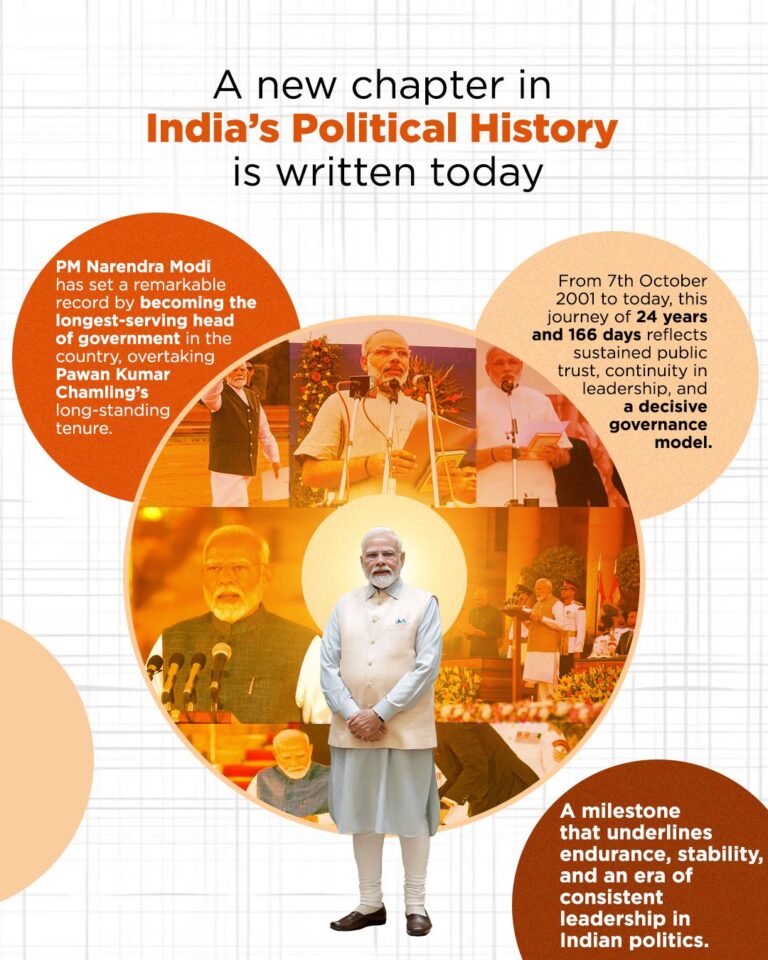
In 2025, marking 150 years since Bankim Chandra’s masterpiece, Prime Minister Narendra Modi recited the complete *Vande Mataram* in public. This act restored:
– The original, unedited lyrics.
– The powerful Maa Durga stanzas.
– The cultural backbone of the freedom struggle.
– The revolutionary whisper: “Bharat Mata is Durga.”
For the first time in independent India, the nation experienced the song in its full glory—the form that once ignited unbreakable spirit against colonial oppression.
Congress’s Real Objection Was Never Policy—It Was Maa Durga
The archival evidence is unequivocal: Congress censored *Vande Mataram* because it embodied the Hindu civilizational essence they refused to embrace. They fled from India’s roots, diluted its symbols, and amputated its soul.
But India endures. India remembers. And India is reclaiming what was nearly lost.
वंदे मातरम्—पूर्ण रूप में, पूर्ण गौरव के साथ।
Author : Sandiip Gandotra, is a serial entrepreneur, startup founder, social media influencer and political analyst with 25 years of overall experience. Tweets at Sandeep Gandotra